What is the best programming language for website development?
Learn about the best programming languages for web development and how to choose the most suitable one for your project. A comprehensive guide to programming a professional website using JavaScript, Python, and PHP, with practical tips.
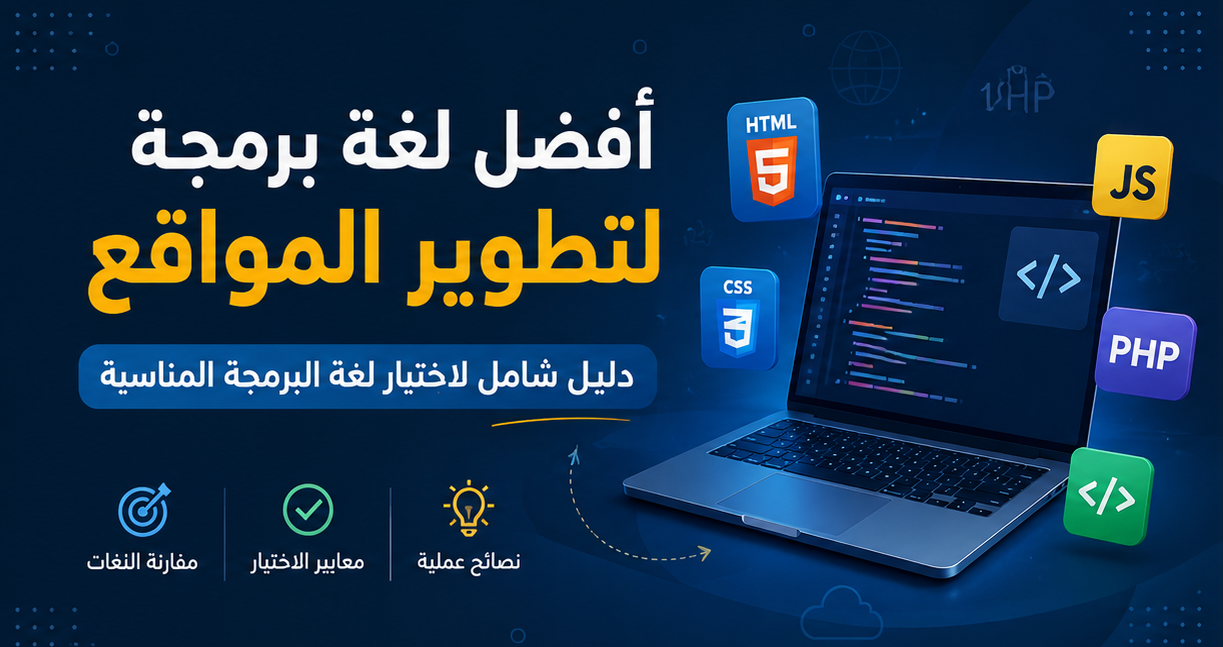
The best programming language for website development cannot be limited to a single option, as the answer depends on the type of project, the size of the website, and the required performance level. However, in general, JavaScript is considered the most widely used language for both front-end and back-end development through environments such as Node.js, while Python and PHP are extensively used for back-end systems and database management. Therefore, choosing the right programming language depends on the project’s goals rather than popularity alone.
In the world of professional website development, it is not about a single programming language, but rather an integrated ecosystem of technologies working together to deliver a smooth user experience and high performance. This is where combining multiple languages becomes essential to achieve the best possible results, a strategy widely adopted by modern tech companies and advanced development platforms such as Wamda digital solutions, which focus on integrated digital services.
What is Website Development and Why is it Important?
Concept of Website Development
Website development is the process of creating and building websites using a set of programming languages and technical tools that work together to produce a functional, fast, and secure website. This includes:
- Designing the user interface (Front-End)
- Building servers and databases (Back-End)
- Managing performance and security
- Improving user experience
The process of website development is not limited to appearance only; it also includes the technical infrastructure that ensures the website’s continuity and efficiency.
Importance of Choosing the Right Programming Language
Choosing the right programming language is a critical step in the success of any digital project, as it affects:
- Website loading speed
- Future scalability and development
- Security level
- Development and maintenance costs
- Compatibility with different devices
The more accurate the choice is at the beginning stage, the fewer technical issues will occur later, and the higher the overall performance quality will be.
Main Types of Programming Languages Used in Website Development
First: Front-End Languages
These languages are responsible for everything the user sees inside the website.
1. HTML
It is the basic structure of any web page and is used to build core elements such as headings, text, and images.
2. CSS
Used to style the design and add visual aesthetics such as colors, fonts, and spacing.
3. JavaScript
It is considered the most important programming language in front-end development, as it adds interactivity and motion to the website, such as:
- Interactive menus
- Pop-up windows
- Dynamic page updates without reloading
Second: Back-End Languages
These work behind the scenes to process data and manage servers.
1. PHP
One of the most commonly used languages in website development, especially for content management systems like WordPress.
2. Python
Known for its simplicity and power, it is widely used in large-scale projects, data analysis, and artificial intelligence applications.
3. Node.js
A runtime environment for JavaScript that allows using the same language for both front-end and back-end development.
Third: Databases
No website can function without data storage, which is where databases come in:
- MySQL
- MongoDB
- PostgreSQL
These tools are an essential part of any professional web development project.
How to Choose the Right Programming Language for Your Project?
Define the Website Goal
Before choosing any programming language, you must first define the main objective:
- E-commerce store
- Blog
- Corporate website
- Educational platform
Each type requires different technologies in website development.
Project Size and Its Impact on Language Choice
- Small projects: PHP and WordPress
- Medium projects: JavaScript and Node.js
- Large projects: Python, React, and advanced frameworks
Choosing correctly at this stage saves significant time and cost later.
Performance and Security
Any successful web development project must balance:
- Speed
- Security
- Scalability
This is why modern companies rely on multiple programming languages in a single project instead of depending on one language only.
Wamda’s Role in Digital Solutions Development
Wamda provides integrated technical solutions in the field of website development and digital marketing, focusing on building projects based on the latest web development technologies to ensure high performance and a professional user experience.
It also works on combining multiple modern technologies to deliver flexible solutions that fit the Saudi market and align with digital transformation trends.
Comparison of the Most Popular Programming Languages for Web Development
JavaScript: The Most Widely Used Web Development Language
JavaScript is considered the backbone of any modern web development project, used for:
- Interactive user interfaces
- Dynamic web applications
- Server-side development via Node.js
Advantages:
- Runs directly in the browser without complex setup
- Supported by all modern browsers
- Suitable for both small and large projects
Disadvantages:
- Requires strong structure in large projects
- Can be complex for beginners in advanced concepts
Today, JavaScript is not just a programming language but a complete ecosystem for building web applications.
Python: Power and Flexibility in Web Development
Python is widely used in projects that rely on data or artificial intelligence.
Advantages:
- Easy to learn compared to other languages
- Strong in data analysis and large systems
- Used by global platforms like Instagram
Disadvantages:
- Slower compared to JavaScript and C++
- Less used in front-end development
Python is ideal for projects requiring intelligence and deep data processing within advanced programming systems.
PHP: The Traditional and Stable Choice
PHP remains one of the most important languages in web development, especially with systems like WordPress.
Advantages:
- Easy for building websites quickly
- Strong hosting support
- Ideal for admin websites and small stores
Disadvantages:
- Less modern compared to JavaScript
- Requires continuous optimization for performance
Despite that, PHP remains a strong choice for traditional website development projects.
Node.js: Unified Front-End and Back-End Development
Node.js is not a programming language but a JavaScript runtime environment that has completely changed web development.
Advantages:
- Single language for the entire project
- High performance for fast applications
- Ideal for interactive applications
Disadvantages:
- Requires strong server management skills
- Not suitable for very simple projects
Node.js has become an essential part of any modern programming language-based web project.
Differences Between Programming Languages Based on Project Type
Corporate and Business Websites
Best options:
- PHP
- WordPress
- JavaScript
Reason:
Easy management, fast implementation, and lower cost in website development.
E-commerce Stores
Best options:
- JavaScript
- Node.js
- Python
Reason:
High performance requirements, complex database integration, and handling customer requests efficiently.
Large Platforms and Smart Applications
Best options:
- Python
- Node.js
- React + APIs
Reason:
Scalability and the ability to handle a large number of users.
How to Choose the Right Programming Language Practically
Based on Purpose, Not Popularity
Choosing a programming language should depend on:
- Project type
- Expected number of users
- Budget
- Scalability
Based on the Team Structure
If the team is small:
- PHP or WordPress is better
If the team is technically advanced:
- JavaScript + Node.js + Python
Based on Launch Speed
- Fast projects: PHP
- Medium projects: JavaScript
- Large projects: Python + Node.js
Common Mistakes in Choosing a Programming Language
Relying on a Single Language Only
One of the biggest mistakes in website development is depending on a single technology without integrating other solutions.
Choosing a Language Not Suitable for Project Size
Choosing a very powerful language for a small project leads to:
- High cost
- Unnecessary complexity
Ignoring Scalability
Any programming language should support future expansion, not just the current solution.
Wamda’s Role in Choosing the Right Technologies
Wamda analyzes project requirements before selecting the appropriate technologies. It does not rely on a single language; instead, it builds systems using multiple programming languages to achieve optimal performance in professional website development suitable for the Saudi market.
How a Website is Built Internally
Core Concept of Web Development
Any website does not rely on a single language; instead, it consists of three main layers:
- Front-End
- Back-End
- Database
Each layer depends on a different programming language that works in harmony to deliver a smooth user experience.
First: Front-End
What does the user see?
This layer is responsible for everything displayed on the website, such as:
- Design
- Colors
- Buttons
- Interaction
Main programming languages used:
- HTML for structure
- CSS for styling
- JavaScript for interactivity
At this stage of web development, the focus is on user experience and usability.
Second: Back-End
What happens behind the scenes?
The back-end acts as the brain of the website, handling:
- Data processing
- Account management
- Request execution
- Database integration
Main programming languages:
- PHP
- Python
- Node.js
Each programming language plays a different role depending on the project type.
Third: Databases
Where is data stored?
Every website needs to store data such as:
- Users
- Orders
- Products
Popular systems:
- MySQL
- MongoDB
- PostgreSQL
These systems are an essential part of professional web development.
How Website Components Communicate
The Request Journey Inside a Website
To understand integration between programming languages, imagine a user performing these steps:
- Enters the website (Front-End)
- Clicks the buy button
- JavaScript sends the request
- Back-End processes the request
- Database stores the data
- The result is returned to the user
All of this happens within seconds using multiple programming languages working together.
Full Stack Development Concept
What is a Full Stack Developer?
A developer who can work on:
- Front-End
- Back-End
- Databases
Why is it important?
Because it connects all parts of website development into one integrated system.
Front-End vs Back-End (Simple Explanation)
Front-End
- Everything the user sees
- Focuses on design and interaction
- Uses HTML, CSS, JavaScript
Back-End
- Everything the user does not see
- Focuses on logic and processing
- Uses PHP, Python, or Node.js
How Programming Languages Affect Website Performance
Speed
Choosing the right programming language determines website loading speed and responsiveness.
Security
A strong web development structure reduces the risk of hacking or data loss.
Scalability
Successful websites must handle user growth without technical issues.
Why Not Rely on One Language Only?
Technical Reason
Each programming language has a specific role:
- JavaScript for interaction
- PHP or Python for processing
- SQL for data management
Practical Reason
Using multiple technologies in web development ensures:
- Greater flexibility
- Better performance
- Scalable solutions
Practical Example of a Complete Website
E-commerce Store
During a purchase process:
- The user interacts via JavaScript
- The request is sent to Node.js or PHP
- Data is stored in MySQL
- The page updates instantly
This integration is the foundation of any successful project using multiple programming languages.
Wamda’s Role in Integrated Systems Development
Wamda designs web development systems that combine multiple technologies within a single project to ensure:
- High performance
- Professional user experience
- Scalability and flexibility
All within a modern web development framework aligned with Saudi digital transformation needs.
Best Programming Languages for Beginners
JavaScript: The Smart Start in Web Development
JavaScript is one of the best choices for anyone entering web development.
Why is it suitable for beginners?
- Runs directly in the browser
- Immediate visual results
- Used in both front-end and back-end
- High demand in the job market
JavaScript is not just a programming language; it is a gateway into web development.
Python: Simplicity and Power
Python is an ideal choice for beginners who want an easy learning curve.
Advantages:
- Simple and readable syntax
- Beginner-friendly
- Used in web development and AI
Python helps understand programming fundamentals in a smooth and simple way.
PHP: The Foundation of Traditional Web Development
PHP is still widely used in web development, especially for systems like WordPress.
Why should beginners learn it?
- Easy to build websites quickly
- Suitable for small projects
- Widely supported by hosting providers
How to Start Learning Web Development
Step 1: Understand the Basics
Start with:
- HTML for building structure
- CSS for styling
- JavaScript for adding interactivity
These are the fundamental building blocks of any web programming language used in web development.
Step 2: Choose a Clear Path
Do not start learning everything at once. Instead, choose a specific path such as:
- Front-End Developer
- Back-End Developer
- Full Stack Developer
Each path in website development requires a different focus and skill set.
Step 3: Practical Training
Theoretical learning alone is not enough. Therefore:
- Build a simple website
- Design a landing page
- Create a small e-commerce project
Practice is the fastest way to master any programming language.
Common Mistakes in Learning Programming
1. Learning Multiple Languages at the Same Time
This leads to confusion and weak understanding in web development.
2. Focusing Only on Theory
Without practical application, you will not understand how programming languages work in real-world projects.
3. Not Building Real Projects
Projects are what prove your skills and prepare you for the job market.
Web Development Learning Roadmap
Phase 1 (1–2 Months)
- HTML
- CSS
- Basic JavaScript
Phase 2 (2–3 Months)
- Advanced JavaScript
- Basic Back-End development
- Working with databases
Phase 3 (3–6 Months)
- Building full projects
- Learning frameworks
- Developing professional website development skills
How to Choose Your Programming Career Path
If you like design:
Choose Front-End Development
If you like logic and data:
Choose Back-End Development
If you want flexibility:
Choose Full Stack Development
Each path requires a different use of an appropriate programming language.
Wamda’s Role in Digital Transformation Support
Wamda contributes to modern web development by providing solutions based on best website development practices, helping individuals and companies build strong, scalable digital projects in the Saudi market.
Professional Tips for Entering Programming
- Do not focus on only one language
- Learn the fundamentals first
- Apply everything you learn practically
- Build real projects
- Keep learning continuously
Future of Web Development in the Coming Years
Shift Toward Smart Systems
Web development is rapidly evolving toward:
- Artificial intelligence
- Automation
- Interactive systems
- Cloud-based applications
This evolution has made choosing a programming language more important than ever, as projects now depend on performance and intelligence more than appearance alone.
Increasing Demand for Full Stack Development
Work is no longer limited to Front-End or Back-End only. The trend is moving toward:
- Full Stack developers
- Integrated systems
- Combining multiple technologies in a single web development project
Growth of JavaScript and Python
It is expected that:
- JavaScript will continue dominating interactive web development
- Python will dominate AI systems and data analysis
Both are among the most important modern programming languages.
Best Programming Language by Project Type
1. Corporate Websites
Best options:
- HTML + CSS + JavaScript
- WordPress (PHP)
Reason:
Easy implementation, fast launch, and low cost in web development.
2. E-commerce Stores
Best options:
- JavaScript (React / Node.js)
- PHP (Laravel)
- Python (Django)
Reason:
Requires product management, order handling, and strong database systems.
3. Large Applications and Platforms
Best options:
- Python
- Node.js
- React + APIs
Reason:
High scalability and strong performance.
How to Choose the Right Programming Language (Final Decision)
Based on Purpose
Each project requires a clear definition before choosing any programming language:
- Selling products → E-commerce store
- Providing services → Business website
- Content → Blog
Based on Budget
- Low: WordPress + PHP
- Medium: JavaScript
- High: Python + Node.js
Based on Future Scalability
If the project is expected to grow, modern web development technologies should be used to support continuous expansion.
Mistakes to Avoid When Choosing a Programming Language
Choosing Without a Plan
The biggest mistake is starting to learn or use a programming language without defining the goal.
Copying Other Projects
Every project has different requirements in web development, and there is no one-size-fits-all solution.
Ignoring Performance and Security
Technology selection must consider:
- Speed
- Security
- Scalability
Professional Advice for Companies and Developers
- Do not rely on a single technology
- Invest in scalable solutions
- Monitor programming trends continuously
- Use AI-powered modern systems
- Focus on user experience first
All these factors directly impact the success of any modern programming language-based project.
Wamda’s Role in Digital Projects Development
Wamda provides web development solutions using the latest technologies, focusing on:
- High performance
- Professional design
- Scalable systems
- Integration of modern technologies
This supports businesses in digital transformation within the Saudi market in a professional and sustainable way.
Conclusion
Ultimately, there is no single best programming language for website development. The choice depends on the project type, goals, and size. JavaScript remains the most versatile option, while Python and PHP provide strong solutions for different use cases.
True success in web development does not depend only on choosing a language, but on understanding how to integrate technologies together to build a complete system that delivers strong user experience and high performance.
If you are planning to launch a digital project or build a professional website, start now by clearly defining your technical needs, then choose the solution that best serves your long-term goals.
Start your project today with professional development solutions from Wamda, and turn your idea into a successful and scalable website.
Frequently Asked Questions (FAQ)
What is the best programming language for web development?
There is no single best language, but JavaScript is the most widely used, with strong support from Python and PHP depending on the project type.
Can I use only one programming language in website development?
Technically yes, but in practice it is better to use multiple languages for better performance and integration.
Is learning programming difficult for beginners?
Not if you start gradually with HTML and CSS, then move to JavaScript.
How long does it take to learn web development?
Around 3 to 6 months for basics, and longer for advanced specialization.
Sources
- MDN Web Docs
- W3Schools
- Stack Overflow Developer Survey
- Official Node.js Documentation
- Official Python Documentation
Related posts
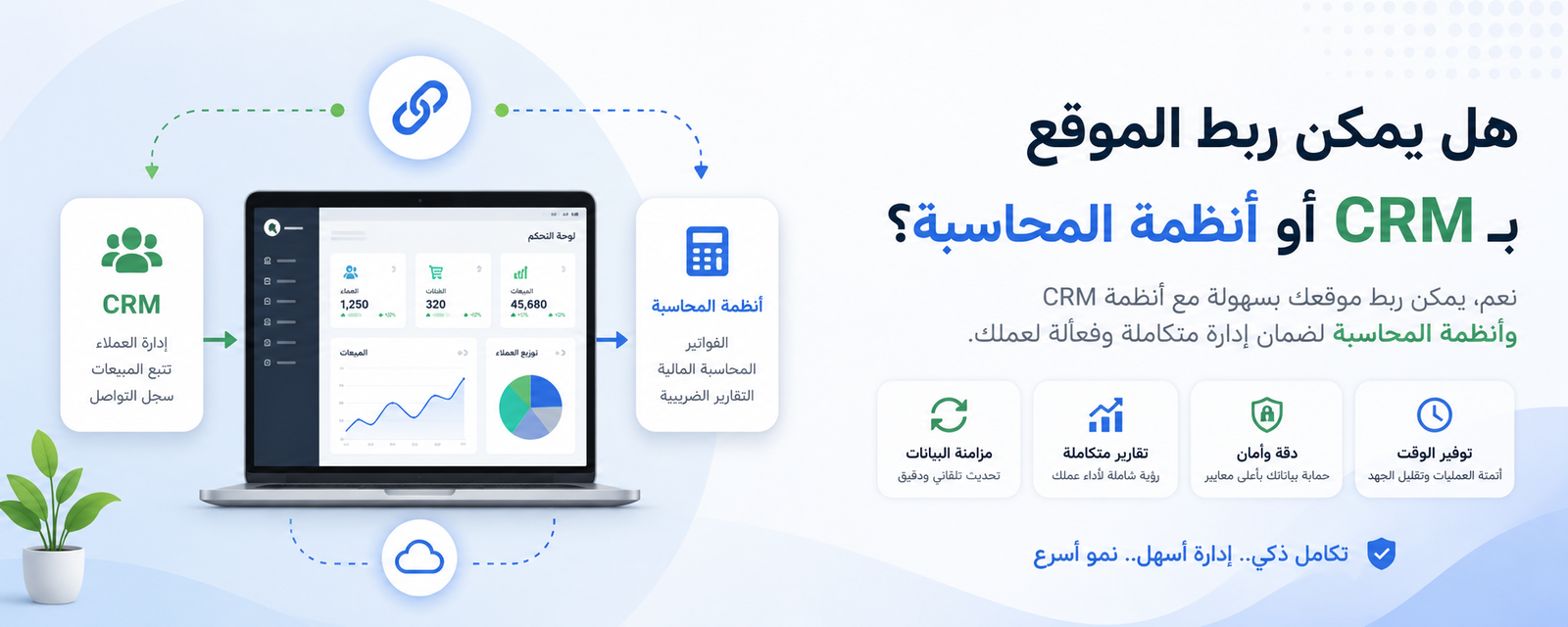
Can a Website Be Connected to CRM or Accounting Systems? | Core Programming Solutions
Learn how to connect your website with CRM and electronic accounting systems. Discover integration methods, benefits, APIs, and how Core builds scalable digital solutions.
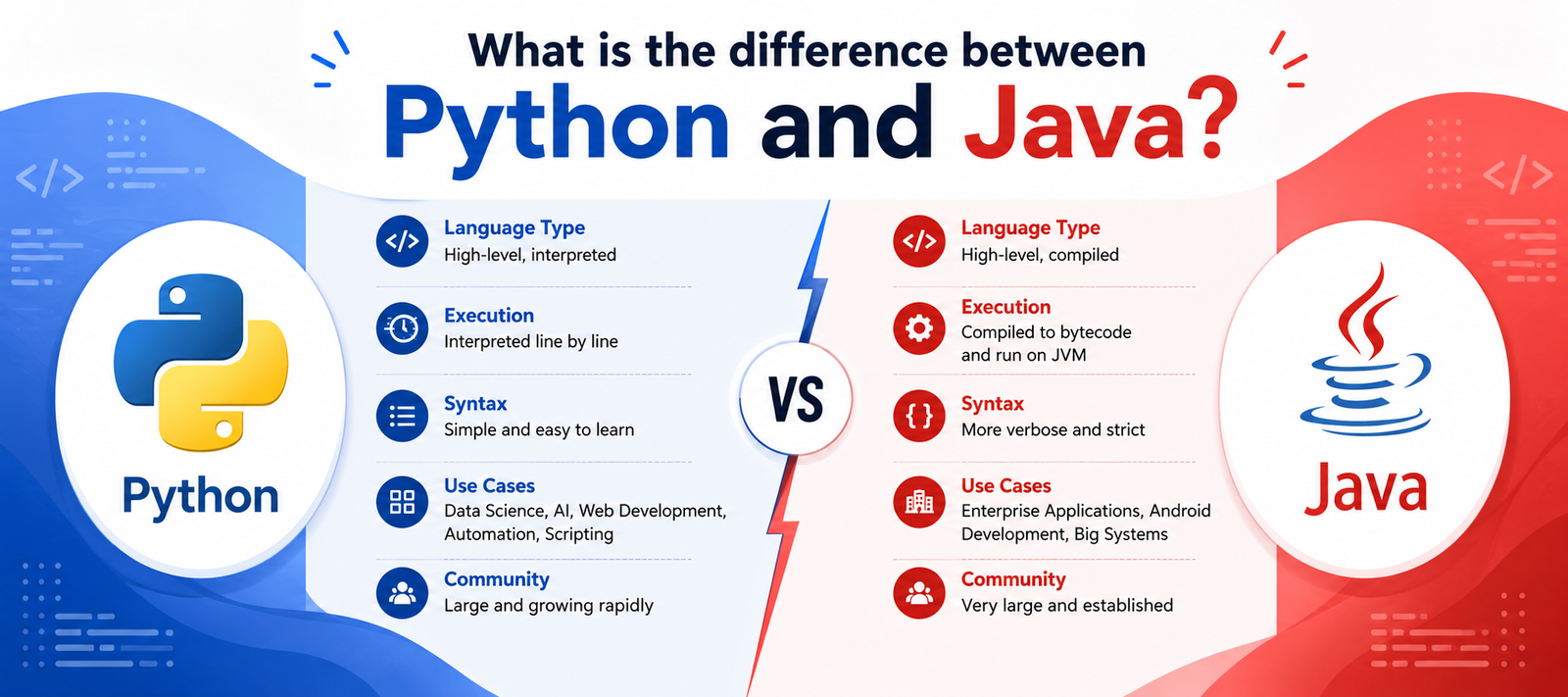
What is the difference between Python and Java?
Learn the difference between Python and Java in performance, web development, usage, and learning curve. A complete guide to choosing the right programming language for your project.
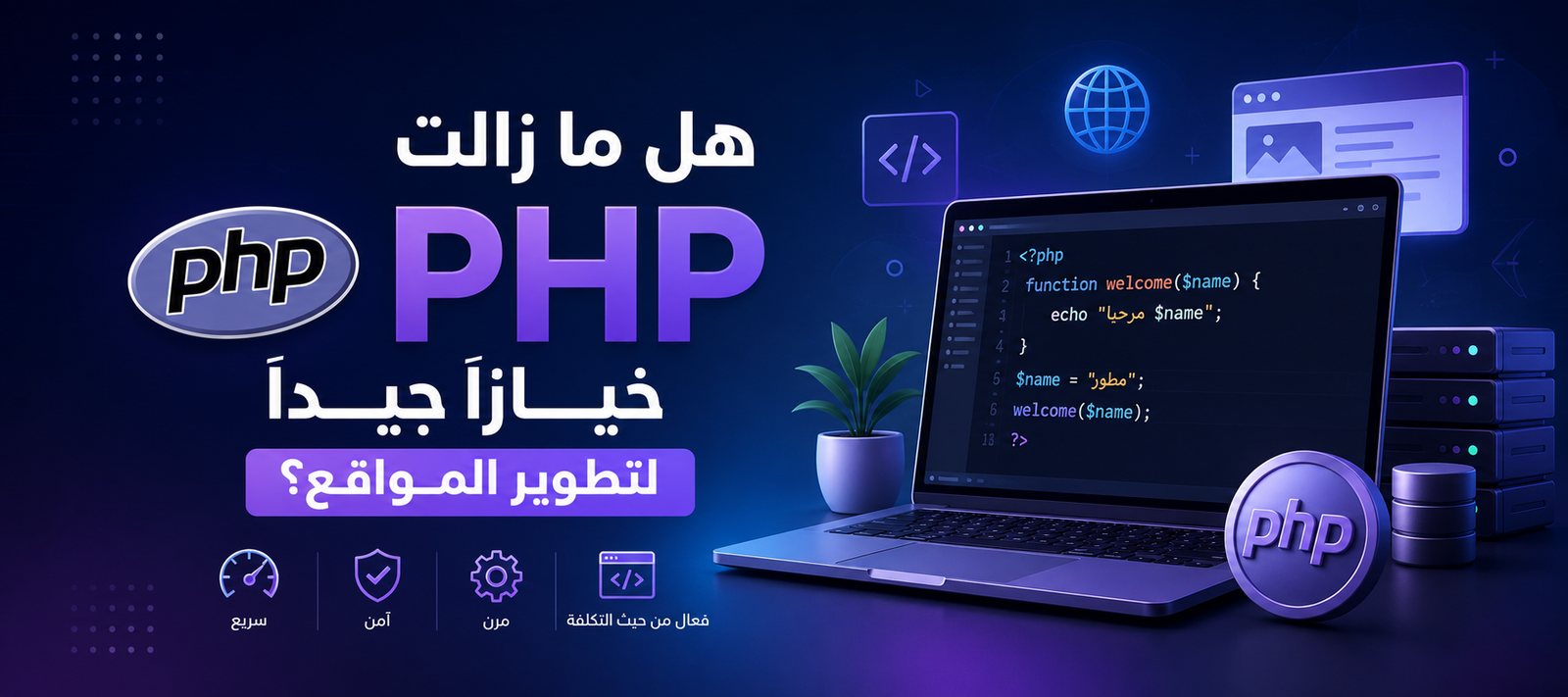
Is PHP Still a Good Choice for Web Development? | PHP Benefits & Code PHP Guide
Learn whether PHP is still a smart choice for web development. Explore PHP advantages, Code PHP, popular frameworks like Laravel, and where PHP excels in modern web projects.
Got a project in mind?
Bring the idea — we'll deliver the product your customers will love.
Get in Touch