What Is the Best Programming Language for Artificial Intelligence?
Discover the best programming language for artificial intelligence. Compare Python and JavaScript, explore their strengths, AI libraries, use cases, and learn how to choose the right language for your project.
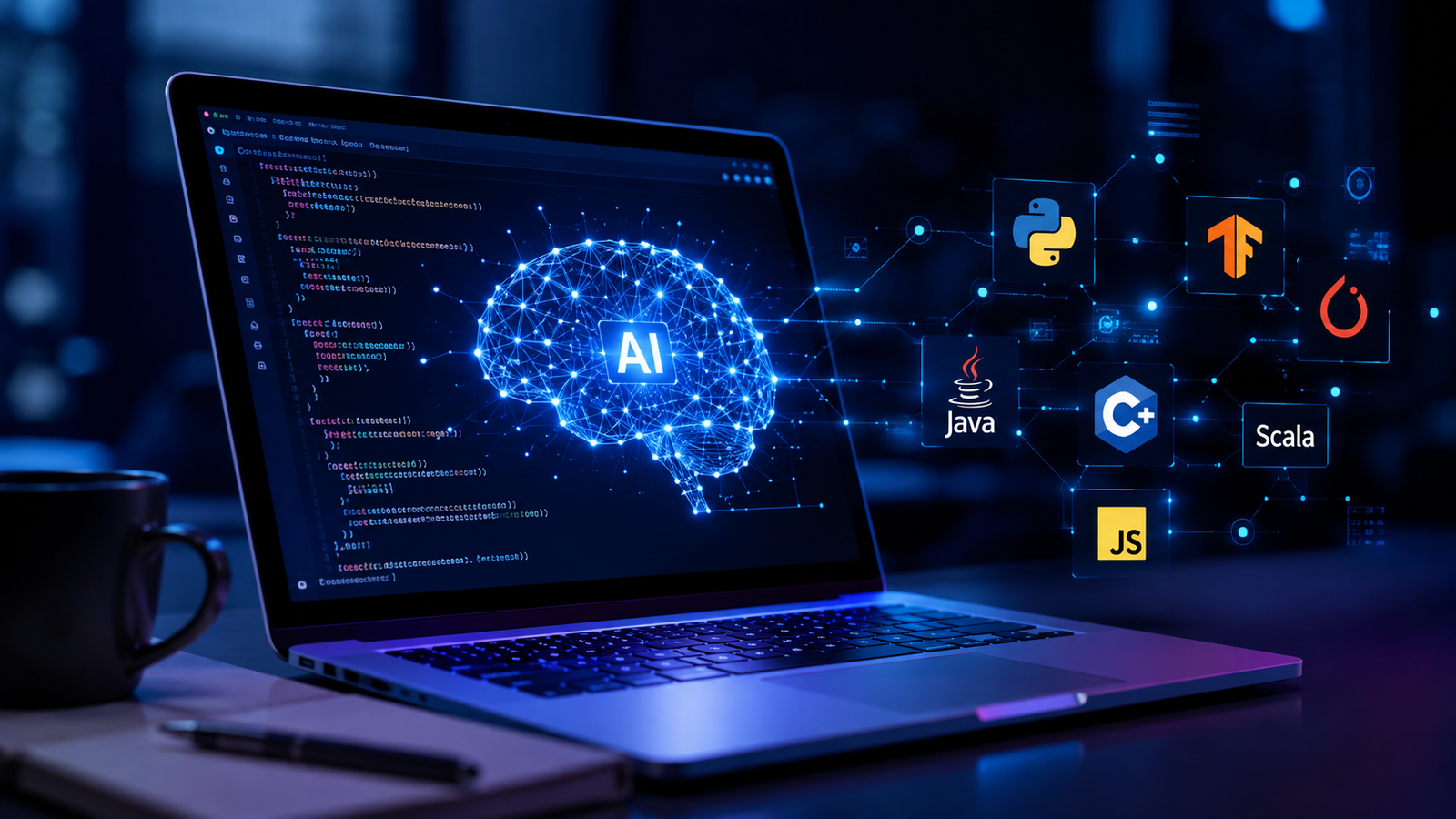
Artificial Intelligence (AI) has become one of the fastest-growing fields in technology, powering applications in software development, data analysis, computer vision, natural language processing, automation, and intelligent systems. As AI continues to evolve, one common question arises among beginners and business owners alike: What is the best programming language for artificial intelligence?
There is no single programming language that fits every AI project. Choosing the right language depends on the type of project, the required tools, development speed, performance, and the availability of suitable libraries. While Python is widely considered the leading language for AI development, other languages such as JavaScript, Java, C++, and R are also used for specific purposes and use cases.
In this article, we'll explore the most popular programming languages used in AI, their strengths, and when each one is the best choice to help you select the right technology for your project.
What Is an AI Programming Language?
Why Does Artificial Intelligence Need Specialized Programming Languages?
Artificial intelligence relies on algorithms and mathematical models that process massive amounts of data. Therefore, a suitable programming language should provide tools and libraries that help developers build, train, test, and integrate AI models into various applications and systems.
For this reason, AI programming languages typically offer:
- Machine learning libraries.
- Easy data handling.
- Support for mathematical modeling.
- Database integration.
- Fast application development.
- Large developer communities.
Why Is Python the Most Popular Language for AI?
Python ranks as the most widely used language in artificial intelligence due to a wide range of features that have made it the first choice for developers, researchers, and technology companies.
Easy to Learn
Python features a simple and readable syntax, allowing developers to focus on building AI models instead of dealing with complex language structures.
Its key advantages include:
- Simple and clean code.
- Easy readability and maintenance.
- Rapid development.
- Suitable for both beginners and professionals.
Powerful AI Libraries
Python offers one of the largest ecosystems of AI and machine learning libraries, including:
- TensorFlow
- PyTorch
- Scikit-learn
- Keras
- NumPy
- Pandas
- OpenCV
These libraries provide ready-made tools for building AI models, analyzing data, and training neural networks, significantly reducing development time.
Strong Community Support
Python has millions of developers worldwide, making it easy to find solutions, tutorials, and ready-made resources.
Its ecosystem includes:
- Official documentation.
- Online courses.
- Open-source projects.
- Practical examples.
- Continuous updates.
This strong community makes Python one of the best choices for anyone entering the field of artificial intelligence.
Can JavaScript Be Used for Artificial Intelligence?
Although JavaScript is primarily known for web development, it has gradually expanded into artificial intelligence, especially with the emergence of browser-based AI technologies.
Using JavaScript in AI Applications
JavaScript can be used for:
- Running AI models directly in the browser.
- Image recognition applications.
- Text processing.
- Chatbots.
- Interactive web applications.
Some JavaScript libraries even allow AI models to run locally without sending data to a server, improving performance while protecting user privacy.
Popular JavaScript AI Libraries
Some of the most popular AI libraries for JavaScript include:
- TensorFlow.js
- Brain.js
- ONNX Runtime Web
- ml5.js
These tools make it possible to integrate AI capabilities directly into web applications, especially for projects requiring real-time browser execution.
Is Python Better Than JavaScript for AI?
For most artificial intelligence projects, Python remains the stronger choice because of its mature ecosystem for machine learning, deep learning, and data analysis.
On the other hand, JavaScript excels when AI models need to run directly inside web browsers or be integrated into interactive web applications.
The best choice depends on the nature of the project rather than the popularity of the language. In many modern applications, developers use Python to build and train AI models, while JavaScript is responsible for displaying AI-powered features and results within the user interface, combining the strengths of both languages.
Why Is Python the First Choice for Artificial Intelligence?
Although several programming languages are used in AI development, Python has become the industry's preferred language thanks to its simplicity, readability, and extensive ecosystem of specialized libraries.
Major technology companies rely on Python to build systems for machine learning, data analysis, computer vision, and natural language processing, making it the top choice for developers and researchers.
Advantages of Python in Artificial Intelligence
Python offers numerous benefits that have made it the leading language for AI development, including:
- Easy-to-read and maintain code.
- A massive developer community.
- Thousands of ready-made libraries.
- Strong industry support.
- Easy integration with databases and cloud services.
- Rapid prototyping.
Using Python allows developers to focus on AI algorithms instead of spending time on complex programming syntax.
Most Popular Python Libraries for Artificial Intelligence
One of Python's greatest strengths is its powerful collection of AI libraries that dramatically simplify development.
TensorFlow
Developed by Google, TensorFlow is widely used for training deep learning models and supports applications such as:
- Image recognition.
- Audio processing.
- Machine translation.
- Predictive analytics.
- Intelligent applications.
It is one of the most widely used frameworks in professional AI projects.
PyTorch
PyTorch has become one of the leading libraries for AI research and production applications.
Its main advantages include:
- Ease of use.
- Flexible model development.
- Fast experimentation.
- Deep learning support.
- An active developer community.
As a result, many universities and technology companies rely on PyTorch for developing advanced AI models.
Scikit-learn
Scikit-learn is widely used for traditional machine learning projects and provides built-in tools for:
- Classification.
- Prediction.
- Clustering.
- Data analysis.
- Model evaluation.
It is an excellent choice for both beginners and experienced developers.
Pandas and NumPy
No AI project is complete without effective data processing.
Developers commonly use:
- Pandas for organizing and analyzing datasets.
- NumPy for high-performance numerical and mathematical computations.
Together, these two libraries form the foundation of almost every Python-based artificial intelligence project.
Can JavaScript Be Used for Artificial Intelligence?
Many people believe that JavaScript is limited to front-end web development, but that is no longer the case. The language has evolved significantly and is now used in several AI applications, particularly within web browsers and web-based applications.
Although Python remains the dominant language in artificial intelligence, JavaScript has valuable use cases in specific scenarios.
JavaScript Use Cases in Artificial Intelligence
JavaScript can be used in many AI-related applications, including:
- Running AI models directly in the browser.
- Developing intelligent web applications.
- Browser-based image recognition.
- Basic data analysis.
- Building web-based chatbots.
JavaScript also enables highly interactive user experiences without requiring all data to be processed on the server, helping reduce latency and improve responsiveness.
TensorFlow.js
TensorFlow.js is one of the most popular tools for using JavaScript in AI development.
It allows developers to:
- Run machine learning models directly in the browser.
- Train simple machine learning models.
- Access the device camera for image recognition.
- Build interactive AI-powered web applications.
For these reasons, TensorFlow.js has become an excellent choice for web developers integrating AI features into their applications.
Python vs. JavaScript for Artificial Intelligence
While both languages can be used in AI projects, each offers different strengths.
Python
Python stands out because of its:
- Extensive AI and machine learning libraries.
- Strong deep learning ecosystem.
- Large developer community.
- Excellent data analysis capabilities.
- Widespread use in scientific research.
- Dominance across most AI projects.
JavaScript
JavaScript excels at:
- Running AI models in the browser.
- Creating interactive user interfaces.
- Seamless integration with web applications.
- Delivering responsive user experiences.
- Reducing server dependency for certain AI tasks.
The best choice ultimately depends on your project's requirements and intended functionality.
Are There Other Programming Languages Suitable for AI?
Besides Python and JavaScript, several programming languages are commonly used in artificial intelligence, depending on project requirements.
These include:
- Java
- C++
- R
- Julia
- C#
However, Python remains the most widely adopted language thanks to its ease of learning and its rich ecosystem of AI frameworks and libraries.
Java for Artificial Intelligence
Java is a powerful programming language widely used in enterprise AI applications, particularly in large organizations that require scalable and reliable systems.
Although Python offers more AI libraries and faster development, Java remains an excellent choice for projects demanding stability and enterprise integration.
Advantages of Java for AI
Java offers:
- Stable performance.
- Efficient memory management.
- Strong support for large-scale systems.
- Multithreading capabilities.
- Excellent scalability.
- A large developer community.
Java also provides several frameworks and libraries that support machine learning and AI application development.
C++ for Artificial Intelligence
C++ is commonly used in AI systems that require maximum performance, especially when handling large datasets or performing computationally intensive tasks.
Typical applications include:
- Autonomous driving systems.
- Robotics.
- Intelligent gaming systems.
- Image processing.
- Computer vision.
Although C++ delivers exceptional execution speed, it generally requires more programming expertise than Python.
R for Data Analysis
R is widely recognized for statistical computing and data analysis, making it useful in AI applications that rely heavily on statistical modeling.
It is commonly used for:
- Data analysis.
- Data visualization.
- Statistical modeling.
- Predictive analytics.
- Report generation.
Despite its analytical strengths, R is less commonly used than Python for building complete AI applications.
Julia and Artificial Intelligence
Julia was designed to combine readable syntax with high execution speed, making it an increasingly attractive option for artificial intelligence and scientific computing.
Its main advantages include:
- High performance.
- Speed comparable to C++.
- Easy-to-read syntax.
- Excellent support for scientific computing.
- Efficient mathematical computation.
Nevertheless, Python still enjoys a much larger ecosystem and broader community support.
How to Choose the Right Programming Language for an AI Project
Choosing a programming language should be based on your project's specific requirements rather than popularity alone.
Important factors include:
- Project type.
- Data volume.
- Required execution speed.
- Development team's expertise.
- Budget.
- Scalability.
- Long-term maintainability.
For example, if your project focuses on machine learning or data analysis, Python is usually the preferred choice. If your goal is to run AI models inside a web application, JavaScript may be the better fit.
When Should You Choose Python?
Python is the ideal option for projects involving:
- Machine learning.
- Deep learning.
- Data analysis.
- Computer vision.
- Natural language processing.
- Automation.
- Rapid prototyping.
Its simple syntax and extensive ecosystem make it suitable for both beginners and experienced developers.
When Should You Choose JavaScript?
JavaScript is a great choice when your project requires:
- Integrating AI into websites.
- Running AI models directly in the browser.
- Building interactive user interfaces.
- Developing intelligent web applications.
- Enhancing user experience.
It is frequently combined with front-end technologies to create AI-powered web experiences without performing every computation on the server.
Common Mistakes When Choosing a Programming Language for AI
Choosing a Language Based Only on Popularity
One of the most common mistakes is selecting a programming language simply because it is popular. The right choice should always be based on your project's actual requirements, technical goals, and long-term needs.
Ignoring Available Libraries and Tools
The strength of an AI language is not determined by the language itself alone, but also by the ecosystem surrounding it. Choosing a language with limited AI frameworks or libraries can significantly slow down development and increase implementation costs.
Overlooking Team Expertise
The success of an AI project depends heavily on the development team's experience. Even the most powerful programming language may not deliver the desired results if the team lacks the necessary expertise.
The Future of Programming Languages in Artificial Intelligence
Artificial intelligence continues to evolve rapidly, and programming languages are evolving alongside it. New frameworks, optimized libraries, and cloud-based AI platforms continue to improve development speed and model performance.
While Python is expected to remain the leading language for AI development, JavaScript is steadily expanding its role in browser-based AI and interactive web applications. Other languages such as Java, C++, and Julia will also continue serving specialized AI use cases.
Which Programming Language Should You Choose?
The answer depends entirely on your project.
Choose Python if your project focuses on:
- Machine learning.
- Deep learning.
- Data analysis.
- Computer vision.
- Natural language processing.
- Scientific computing.
Choose JavaScript if your project requires:
- AI-powered web applications.
- Running AI models directly in the browser.
- Interactive user interfaces.
- Real-time user experiences.
In many modern AI projects, developers combine multiple programming languages, using each one where it performs best.
Conclusion
There is no single programming language that is ideal for every artificial intelligence project. The right choice depends on your objectives, technical requirements, available resources, and future growth plans.
Python remains the industry leader because of its simplicity, extensive AI libraries, and strong community support. Meanwhile, JavaScript has become an excellent option for integrating AI into modern web applications and delivering intelligent browser-based experiences.
Other languages such as Java, C++, R, and Julia also play important roles in specialized AI domains. Understanding the strengths of each language allows developers and businesses to build more efficient, scalable, and future-ready AI solutions.
Frequently Asked Questions (FAQ)
What is the best programming language for artificial intelligence?
Python is generally considered the best programming language for AI because of its powerful ecosystem of machine learning, deep learning, and data science libraries.
Can JavaScript be used for artificial intelligence?
Yes. JavaScript can run AI models in web browsers using libraries such as TensorFlow.js, making it ideal for interactive web applications.
Is Python better than JavaScript for AI?
For most AI projects, yes. Python offers more mature frameworks, stronger data science capabilities, and broader adoption in machine learning and deep learning.
Which language should beginners learn for AI?
Python is the most recommended language for beginners because of its simple syntax, extensive documentation, and large learning community.
Can multiple programming languages be used in one AI project?
Yes. Many modern AI systems use Python for training AI models and JavaScript for deploying those models in web applications, combining the strengths of both languages.
References
- Python Official Documentation
- JavaScript (MDN Web Docs)
- TensorFlow Documentation
- TensorFlow.js Documentation
- PyTorch Documentation
- Scikit-learn Documentation
- NumPy Documentation
- Pandas Documentation
- OpenCV Documentation
- Modern Artificial Intelligence and Software Engineering References
Related posts
What is the best programming language for website development?
Learn about the best programming languages for web development and how to choose the most suitable one for your project. A comprehensive guide to programming a professional website using JavaScript, Python, and PHP, with practical tips.

Can a Website Be Connected to CRM or Accounting Systems? | Core Programming Solutions
Learn how to connect your website with CRM and electronic accounting systems. Discover integration methods, benefits, APIs, and how Core builds scalable digital solutions.
What is the difference between Python and Java?
Learn the difference between Python and Java in performance, web development, usage, and learning curve. A complete guide to choosing the right programming language for your project.
Got a project in mind?
Bring the idea — we'll deliver the product your customers will love.
Get in Touch