Can a Website Be Connected to CRM or Accounting Systems? | Core Programming Solutions
Learn how to connect your website with CRM and electronic accounting systems. Discover integration methods, benefits, APIs, and how Core builds scalable digital solutions.
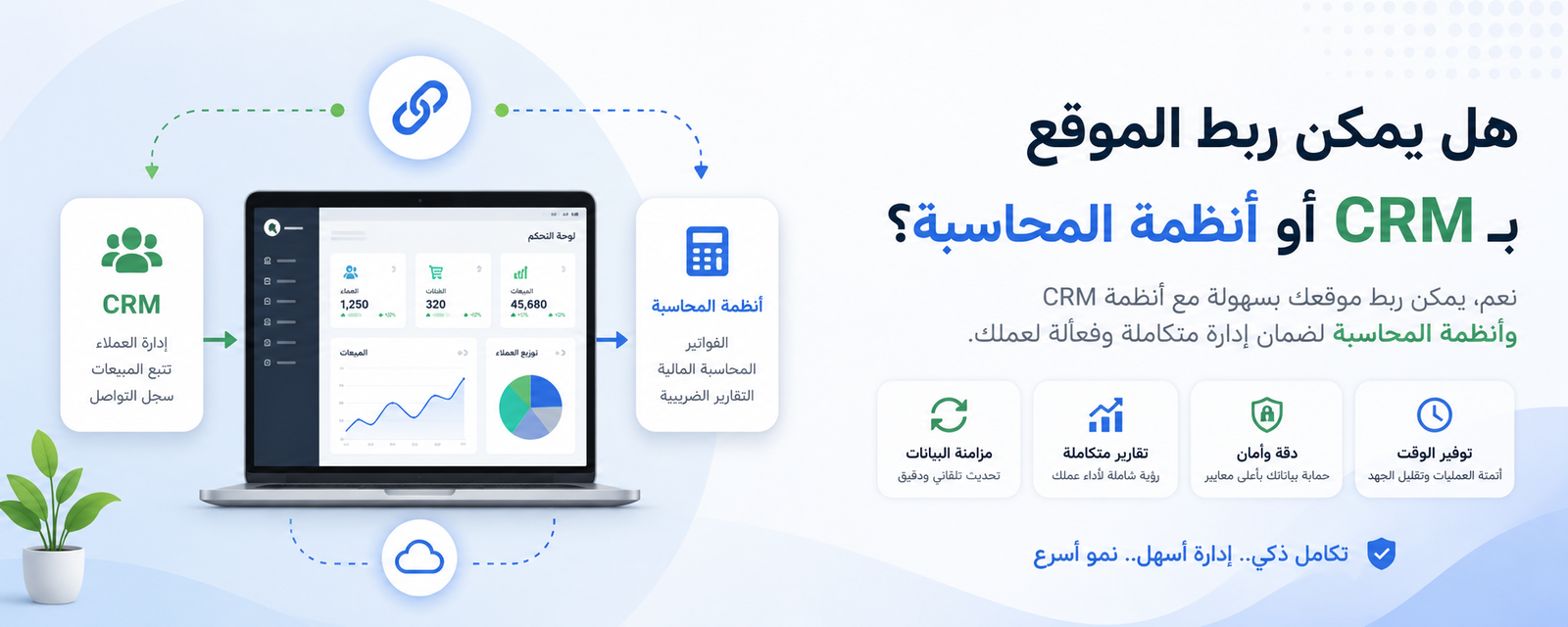
Can a Website Be Connected to CRM or Accounting Systems?
Yes, a website can be easily connected to CRM systems or electronic accounting systems through modern integration technologies such as APIs and programming connections. This allows automatic data exchange between the website and the company’s internal systems.
This integration helps improve customer management, track sales, organize financial operations, and reduce manual work.
In today’s digital business environment, a website is no longer just a platform for displaying services or products. Instead, it has become an essential part of an integrated operational system. Therefore, modern companies rely on connecting their websites with systems such as CRM and accounting management solutions to obtain accurate data and achieve more efficient operations.
Through the advanced programming solutions provided by Core, companies can develop professional websites that are compatible with different digital systems, ensuring easier data management and structured business growth.
What is CRM and Why Do Companies Need to Connect It With Their Website?
CRM Definition
A CRM (Customer Relationship Management) system is a specialized solution designed to manage customer relationships by organizing all customer-related information and data in one place.
A CRM system helps companies to:
- Store customer information
- Track communication requests
- Manage sales processes
- Follow up with potential customers
- Improve customer service
Instead of relying on separate files or manual processes, CRM collects and analyzes information to help companies make better decisions.
How Does CRM Work With a Website?
When a website is connected to a CRM system, data is automatically transferred between both platforms.
For example:
When a customer fills out a contact form on the website:
- The customer enters their information
- The website receives the data
- The information is sent directly to CRM
- A new customer profile is created inside the system
- The sales team starts following up
This integration makes customer management faster and more accurate.
Importance of Connecting a Website With CRM
Improving Customer Management
One of the most important benefits of connecting a website with CRM is organizing all customer data inside one system.
Instead of manually searching for:
- Contact numbers
- Previous messages
- Customer requests
All details are stored in an organized database.
Increasing Sales Team Efficiency
The integration between the website and CRM helps sales teams to:
- Identify interested customers
- Follow up on new requests
- Prioritize communication
- Improve conversion rates
This increases the chances of completing successful sales.
Tracking the Customer Journey
Through a CRM, companies can track the customer journey starting from:
- Visiting the website
- Sending an inquiry
- Requesting a service
- Completing a purchase
This gives businesses a complete view of customer behavior.
What Are Electronic Accounting Systems?
Definition of Electronic Accounting Systems
Electronic accounting systems are digital solutions that help companies manage financial operations automatically and efficiently.
These systems are used for:
- Recording sales
- Managing invoices
- Tracking expenses
- Preparing financial reports
- Organizing accounts
Instead of relying on traditional methods, electronic systems provide higher speed and accuracy in financial management.
Why Do Websites Need Integration With Accounting Systems?
When a company has an online store or a website that provides paid services, connecting the website with electronic accounting systems helps to:
- Automatically record orders
- Create invoices
- Update sales information
- Reduce human errors
How Is a Website Connected With CRM or Accounting Systems?
Using APIs for Integration
The integration process usually depends on a technology called API, which allows different systems to communicate and exchange data.
Through APIs, the website can send and receive information such as:
- Customer data
- Order details
- Payment information
- Product information
Practical Example of Integration
Imagine an online store:
A customer purchases a product from the website.
The following happens:
- The website records the order
- CRM stores customer information
- The accounting system records the financial transaction
- Inventory is updated automatically
All of this happens without manual data entry.
Role of Core Platform in Connecting Websites With Digital Systems
Core, a platform specialized in programming services, helps businesses build flexible digital websites and systems that can integrate with different technical solutions.
Through customized development solutions, websites can be connected with:
- CRM systems
- Electronic accounting systems
- Inventory management systems
- Payment platforms
This creates an integrated digital environment that supports business growth and improves operational efficiency.
Types of CRM Systems That Can Be Connected to Websites
CRM systems vary depending on company size and business needs. However, most of them are based on one main idea: collecting customer data, organizing it, and transforming it into useful information that improves sales and services.
When developing a professional website, it can be integrated with different types of CRM systems according to project requirements.
Sales Management CRM
This type is one of the most commonly used systems, as it helps companies organize the entire sales process.
It helps with:
- Tracking potential customers
- Recording sales opportunities
- Managing quotations
- Following order status
When a website is connected to this type of CRM, new customer leads are automatically sent to the sales team instead of losing potential opportunities.
Customer Service CRM
This type focuses on improving customer experience after communication or purchase.
It allows companies to:
- Record complaints and inquiries
- Track support requests
- Save customer interaction history
- Improve response speed
When the website is connected with a customer service system, the team can access customer information faster and more accurately.
Marketing and Campaign Management CRM
Companies use this type of CRM to manage marketing campaigns and analyze customer behavior.
Through integration between the website and CRM, businesses can:
- Identify customer sources
- Analyze interactions
- Segment customers into groups
- Send suitable offers to each category
Connecting E-Commerce Stores With CRM
E-commerce stores especially need integration with CRM systems because they handle a large amount of customer and order data.
When a customer completes a purchase:
- Customer information is recorded
- Order history is saved
- Previous purchases are analyzed
- Future marketing campaigns are improved
This integration helps the store build a long-term relationship with customers.
Benefits of Connecting an Online Store With CRM
Improving the Shopping Experience
When an online store has clear customer data, it can provide:
- Better recommendations
- Suitable offers
- Faster customer service
This helps create a more personalized shopping experience.
Increasing Sales
By analyzing customer data, businesses can identify:
- Most requested products
- Most engaged customers
- Best sales periods
This allows marketing decisions to become more accurate and helps increase sales.
Connecting a Website With Electronic Accounting Systems
Electronic accounting systems are among the most important solutions companies use to organize financial operations.
When connected with a website, financial processes become automated instead of requiring manual data entry.
How Does Integration With Accounting Systems Work?
When a sale happens on the website:
- The order is recorded
- Data is transferred to the accounting system
- An electronic invoice is generated
- Financial reports are updated
This reduces processing time and minimizes human errors.
Importance of Integration With Electronic Invoicing Systems
Many companies currently depend on electronic invoicing to manage financial transactions.
Connecting the website with electronic accounting systems helps with:
- Automatically generating invoices
- Saving financial records
- Simplifying auditing processes
- Improving revenue management
Can a Website Be Connected to Any Accounting System?
Yes, in most cases websites can be connected to accounting systems, but this depends on:
- Availability of an API
- Website type
- Required data
- Accounting system structure
Some systems provide ready-made integration tools, while others require custom development.
Steps to Connect a Website With CRM or an Accounting System
1. Analyze Project Requirements
Before starting the integration process, it is necessary to determine:
- What data needs to be transferred?
- What processes require automation?
- What systems are currently used?
This step helps avoid unnecessary integrations.
2. Choose the Right Integration Method
There are several methods, including:
API Integration
It is the most common method because it allows data exchange between the website and external systems.
Webhooks
Webhooks are used to send automatic notifications when a specific action occurs, such as:
- Creating a new customer
- Creating an order
- Updating payment status
Shared Databases
In some large projects, direct database connections are used to exchange information.
Practical Example of Complete Integration
Imagine a company that provides services through a website.
The customer submits a request:
Front-End
Displays the service request form.
Back-End
Processes customer information and manages the request.
CRM
Stores customer details and tracks the request.
Accounting System
Records the invoice and financial details.
Result
A complete digital system that works without manual procedures.
Why Do Companies Depend on Digital Integration?
Because connecting websites with internal systems provides:
- Faster business operations
- Fewer data errors
- Better customer experience
- Reduced employee workload
Core’s Role in Developing Integration Systems
Core provides programming solutions that help companies build websites and digital systems compatible with their operational requirements.
Through customized programming solutions, websites can be integrated with:
- CRM systems
- Electronic accounting systems
- Inventory management systems
- Electronic payment solutions
This allows the website to become part of an integrated business ecosystem instead of being only a digital presence.
Benefits of Connecting a Website With CRM and Accounting Systems
Integration between websites and management systems has become one of the most important steps that help companies improve their workflow, especially with the increasing dependence on digital solutions.
Having a website alone is no longer enough. Companies need to connect it with systems that manage their daily operations.
When a website is integrated with CRM or electronic accounting systems, data becomes a valuable resource that helps improve decisions and increase operational efficiency.
Improving Data Management Within the Company
Before integration, companies often depended on manually transferring data between:
- Website
- Sales department
- Finance department
- Customer service team
This could lead to:
- Repeated data entry
- Data accuracy issues
- Delayed information updates
When the website is connected with CRM, information moves automatically between different systems.
Reducing Manual Work
One of the main benefits of integration is reducing manual processes.
For example:
When a new customer registers through the website:
Instead of an employee manually adding customer details into the system, a new customer profile is automatically created inside the CRM.
When a purchase is completed:
- The order is updated
- The financial transaction is recorded
- Data is transferred to electronic accounting systems
All processes become faster and more accurate.
Improving Customer Experience
Customer experience has become a key factor in business success.
When a website is connected with CRM, companies can access:
- Customer history
- Previous orders
- Interested services
- Previous inquiries
This helps teams provide more personalized support.
Increasing Sales Team Efficiency
Integration with a CRM system allows sales teams to manage customers more effectively.
Instead of searching through different platforms, the team can:
- Access complete customer information
- Track sales stages
- Identify interested customers
- Organize follow-ups
This improves the chances of converting leads into actual customers.
Improving Reports and Decision-Making
Data collected from the website and internal systems provides management with a clearer view of business performance.
Through integration, companies can analyze:
- Number of orders
- Sales volume
- Customer behavior
- Marketing campaign performance
Electronic accounting systems also provide accurate reports about:
- Revenue
- Expenses
- Profits
- Sales activities
Difference Between Ready-Made Integration and Custom Integration
When connecting a website with an external system, there are two main options:
Ready-Made Integration
This method depends on existing plugins or available solutions.
Advantages:
- Faster implementation
- Lower cost
- Suitable for simple projects
Disadvantages:
- Limited customization
- May not support special requirements
- Difficult to modify in some cases
Custom Integration
Custom integration is developed according to the specific needs of the project.
Advantages:
- High flexibility
- Full control over data
- Future scalability
Suitable for:
- Large companies
- E-commerce stores
- Digital platforms
Core provides customized programming solutions that help businesses build integrations designed specifically for their workflows.
What Data Can Be Exchanged Between the Website and Systems?
Customer Data
Including:
- Name
- Phone number
- Email address
- Account details
This information is sent to CRM to manage customer relationships.
Order Data
Including:
- Order number
- Products
- Quantity
- Order status
Financial Data
It can be transferred to electronic accounting systems, such as:
- Invoice value
- Taxes
- Payment methods
- Payment status
Inventory Data
For e-commerce stores, integration can update:
- Available stock quantities
- New products
- Inventory status
Best Practices Before Integrating a Website with External Systems
Understanding Project Requirements First
Before implementing any integration between a website and a CRM or electronic accounting systems, the main objective of the integration must be clearly defined.
Not every project requires the same level of integration, so it is important to identify:
- What data does the company need to transfer?
- What processes should be automated?
- Which systems are currently in use?
- What is the expected future growth?
Proper planning ensures a more efficient system and avoids unnecessary costs.
Choosing the Right Integration Technologies
Integration Based on Project Needs
Integration methods vary depending on the nature of the project. The choice is based on:
- Website size
- Type of external system
- Data volume
- Required security level
Most Common Integration Methods
API Integration
One of the most widely used methods, allowing data exchange between systems in a structured way.
It is used to transfer:
- Customer data
- Orders
- Products
- Invoices
Webhooks
Used to send automatic notifications when a specific event occurs on the website, such as:
- New customer registration
- Order creation
- Payment status update
This ensures real-time synchronization between systems.
Practical Examples of System Integration
Example: Company Website Connected to CRM
When a customer visits the website:
- They submit a contact form
- Data is automatically sent to the CRM
- A customer record is created
- The sales team receives the lead
- The customer is followed up through the system
This reduces time and prevents losing potential sales opportunities.
Example: E-Commerce Store Connected to Accounting System
When a customer purchases a product:
- The order is recorded on the website
- Transaction data is sent to the accounting system
- An invoice is generated
- Inventory is updated
- Financial records are stored automatically
This makes store management more organized and efficient.
Benefits of Digital Integration for Businesses in Saudi Arabia
Supporting Digital Transformation
With the rapid growth of digital services, companies need solutions that help them manage operations efficiently. Integrating websites with internal systems helps:
- Improve work speed
- Reduce manual processes
- Increase data accuracy
- Enhance customer experience
Improving Operational Efficiency
When systems work together, manual data transfer between departments is minimized, leading to:
- Time savings for employees
- Fewer human errors
- Faster decision-making
Better Business Visibility
By integrating the website with CRM and electronic accounting systems, management gains accurate insights into:
- Customers
- Sales performance
- Financial data
- Campaign results
This supports smarter business growth strategies.
Do All Websites Need CRM and Accounting Systems?
Simple Websites
Some informational websites may not require advanced integrations, especially if their purpose is only to display information. However, integration can be added later when the business grows.
E-Commerce Platforms
These usually require integration due to:
- High number of customers
- Frequent orders
- Payment processing
- Inventory management
Service-Based Companies
Integration becomes valuable when there are:
- Booking requests
- Contact forms
- Client follow-ups
- Contracts or invoices
Why Choose Core for Website Integration Solutions?
Core provides advanced development solutions that help businesses build scalable websites and systems tailored to modern business needs.
Through custom development, it is possible to implement:
- CRM integration
- Electronic accounting systems integration
- Internal dashboard development
- Custom management systems
- Performance and UX optimization
The goal is to transform a website from a simple interface into a fully integrated digital business system that supports growth.
Conclusion
Integrating a website with CRM or electronic accounting systems has become a fundamental requirement for modern businesses seeking efficiency and digital transformation.
This integration helps improve customer management, reduce manual work, increase data accuracy, and accelerate daily operations.
The choice of integration method depends on the project type, business size, and internal systems used.
With advanced development solutions provided by Core, companies can build scalable and fully integrated digital systems that enhance performance and support long-term growth.
If you want to build a fully integrated website connected to your business systems, start now by contacting Core to get a tailored development solution for your needs.
FAQ
Can a website be integrated with a CRM system?
Yes, websites can be integrated with CRM systems using APIs and webhooks to automatically transfer customer and order data.
Can a website be connected to accounting systems?
Yes, electronic accounting systems can be integrated to automatically manage invoices, sales, and financial records.
What is the benefit of CRM integration?
It improves customer management, tracks sales, organizes data, and increases team efficiency.
Do e-commerce stores need system integration?
Yes, because they handle orders, payments, inventory, and invoices continuously.
Does integration require custom development?
It depends on the system. Some platforms offer ready-made integration, while others require custom development.
Sources
- Official REST API documentation
- CRM system documentation
- Web development and integration references
- Electronic accounting system documentation
- Digital security and data protection standards
Related posts
What is the best programming language for website development?
Learn about the best programming languages for web development and how to choose the most suitable one for your project. A comprehensive guide to programming a professional website using JavaScript, Python, and PHP, with practical tips.
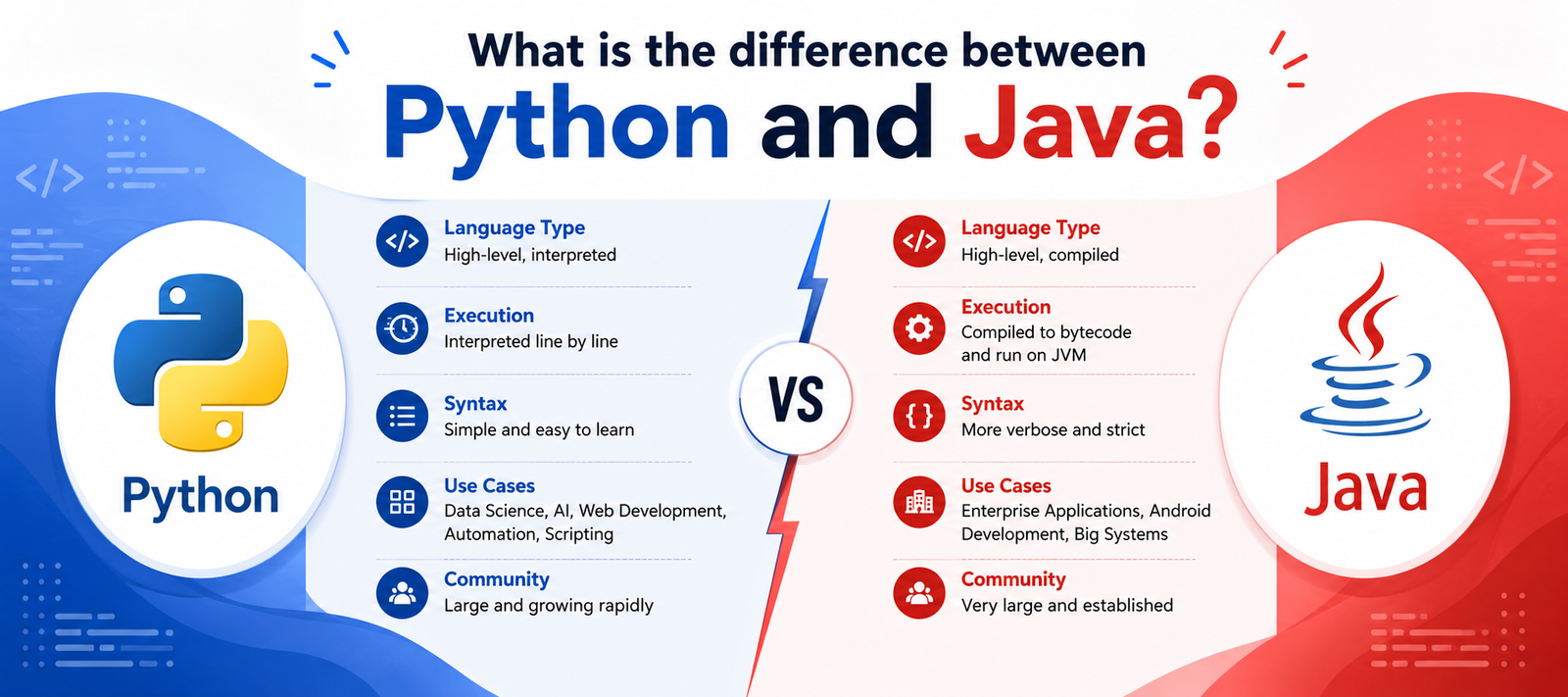
What is the difference between Python and Java?
Learn the difference between Python and Java in performance, web development, usage, and learning curve. A complete guide to choosing the right programming language for your project.
Is PHP Still a Good Choice for Web Development? | PHP Benefits & Code PHP Guide
Learn whether PHP is still a smart choice for web development. Explore PHP advantages, Code PHP, popular frameworks like Laravel, and where PHP excels in modern web projects.
Got a project in mind?
Bring the idea — we'll deliver the product your customers will love.
Get in Touch